Floatation, Holistic Therapies & Holistic Practitioner Training
Category: Energy
Energy systems management is simple and powerful if you have the tools. Education and energy systems clearing is important to the process of awakening the Spirit within.
Men have been conditioned to believe “real men do not cry” they have learned to minimize pain. Messages received as boys is; “tough it out,” never allow others to see you might be in pain, physically or emotionally. Learning to override the signals of the body as a little boy continues into adult life. “Men are as likely to seek medical assistance, particularly pertaining to emotional health, as they are to stop and ask directions.” They have learned that they can fix problems, they are not the problem.
The basis of many health problems whether they are men or women is lack of education around self nurturance and caring for self. In general most people fail to recognize the true gift of giving is from a fullness of self, otherwise giving is a reaction to a place of emptiness within.
Men and women complain of lack of time and then they feel guilty for taking the time when they do something for themselves. Poor nutrition, and lack of proper exercise are a couple of areas that lead to health issues, these areas however appear to be related to stress as a result of too much to do in a society that values productivity. “Stress has been defined when circumstances place people in situations where there are not enough resources.” (Brannon, 2007) Heart disease is the leading cause of death in both men and women, only recently medical professionals are acknowledging this fact pertains to women as well.
Both men and women struggle, we are all on the same battle field and for reasons beyond our understanding we think we are fighting a different battle. Men and women hold high expectations of each other and self resulting in tremendous amounts of stress. Learning to ask for help from others is a sign of strength that many perceive as weakness. “The biggest problem that men have is not so much a specific disease, says Bonhomme, but the diseases are the result of lack of health care monitoring earlier in life.” (Zamora, n.d.) Monitoring health care is a sign of self-care and self-nurturance, something that both men and women fail to do well.
Women’s Health versus Men’s Health
Major areas of concern in the area of male health are:
Mental Health Issues
Depression
Anxiety
Obsessive Compulsive Disorder
Physical Health Issues
References
Brannon, L. (2007). Genders: Psychological Perspectives (5th ed.). : Pearson.
Zamora, D. (n.d.). Mens Top Five Health Concerns. Retrieved from http://men.webmd.com
Visit our website for some non-invasive and non-disclosing self-care options.
Marijuana History directed towards students. Below is a research paper on the effects of marijuana long term. The changes in the plant over the years and the impact it will have used medicinally or as a tool to promote relaxation. I wrote this paper prior to it’s legalization in many states.
Author: Tina Brigitini, CCIH, DAP, LMT, RPT
Legalize Marijuana?
Hello and welcome! I understand that many of you are upset about the recent crack down to the use and distribution of marijuana on campus. I am also aware that you feel that the use of marijuana is similar to that of caffeine use. Quite honestly both caffeine and marijuana are detrimental to your overall health; however I am here today to educate you to the physical, psychological, and social consequences of engaging in the use of marijuana.
As students you will continue to be faced with the stresses of school, preparation for exams, financial challenges, and social challenges as you strive to achieve your educational goals which will prepare you for the rest of your life. You will also have many opportunities to make decisions that will directly impact your health, your success, your ability to excel or fail. Some of these opportunities will be presented in how you choose to handle your stress levels. I am here to speak with you specifically on the impact of marijuana, although considered by many to be a safe drug of choice, you are about to educated on the detrimental effects marijuana has on the physical body including the brain and the lungs. You will be educated to make decisions as to whether or not this drug will support your long term goals in relation to your education as well as your physical and emotional well being.
Let us begin with the history of the cannabis plant and the uses and then the changes that have been made to this natural plant which have changed the chemistry providing even more danger to the physical body. The plant was first observed in 1545 by European explorers. The hemp plant, cannabis was once considered to be a useful crop, farmers were actually fined for not growing hemp as early as 1617 when it was introduced to England and later cultivated in Virginia. This plant was used as a natural household drug to treat common ailments such as headaches and menstrual cramps. Things began to change as the drug companies began to cultivate stronger varieties of the plant for use in drug products. The plant was renamed to “cannabis Americana.” It was not until 1910 with the Mexican Revolution when drug trafficking opened up and growth and transport became a profitable business. (“Marijuana - History”) This created a change in this once considered household medicine as changes to the plant became more potent and harmful.
Musicians were the first to claim that smoking the marijuana plant provided them with more freedom and ease in the creation of their music. This lead to an increase in mind altering drugs primarily marijuana and alcohol which quickly spread into many popular cities such as Chicago, New York, London, and Paris.
Scientist have since discovered that use of this plant once considered medicinal has many detrimental effects on the brain, the primary reason for this is due to the chemical THC which has the ability to attach to the cannabis receptors of the brain which lead to the “high” associated with the drug. Specific parts of the brain affected are those that effect coordination, memory, pleasure, concentration, appetite, thinking, and time perception. “Research has shown that, in chronic users, marijuana’s adverse impact on learning and memory can last for days or weeks after the acute effects of the drug wear off.2” (“Info Facts: Marijuana”)
Considering the fact that most people abusing this drug are smoking it would lead us to the next conclusion; the impact to the healthy lung tissue. Marijuana smoking, like cigarette smoking causes inflammation to the lung tissue leading to respiratory issues, marijuana has 50-70 percent more carcinogenic hydrocarbons than cigarette smoke. People who smoke marijuana inhale the smoke more deeply than cigarette smokers creating similar issues to that of tobacco users. It has not yet been proven, however in time we may see an increase in lung cancer as a result of marijuana smoking. The fact is both marijuana and tobacco contain carcinogens, cancer causing agents; this will compromise the immune system diminishing the body’s ability to ward off infection. It is fact that the physiological changes to the body include increase in heart rate, this may not be detrimental to the person with no other health concerns however many health issues are undetected. The fact is that anyone who has undiagnosed health issues runs the risk of serious health challenges as a result of increasing heart rate.
From a psychological perspective research has proven that smoking marijuana in vulnerable individuals may contribute to the onset of schizophrenia, and paranoia, while also increasing levels of anxiety. “A number of studies have shown an association between chronic marijuana use and increased rates of anxiety, depression, and schizophrenia.”(“Info Facts: Marijuana”) Anyone can experience feelings of panic, particularly those who have early childhood traumas; these feeling can be exasperated with the use of marijuana leading to visits to the emergency room. In the 1930’s the connection between marijuana and psychotic break down was one of the main arguments in outlawing marijuana. “There have been reports of psychotic “breakdowns” occurring with rare frequency after marijuana has been smoked, but the causal relationship is in question.” (Hart, Ksir, & Ray, 2009, p. 384)
Other physical concerns are the possible interference of the reproductive systems in both men and women. This determination may be more speculation as evidence has yet to be able to provide direct correlation due to the fact that most people have also been cigarette smokers and or alcohol abusers.
As college students you have created many goals in your life, marijuana use is not going to support your ability to attain these goals. The long term effects on memory impairment, motivation, and your ability to learn have been shown to be dramatically reduced over time. In stopping the abuse of marijuana and in time studies have shown students can reverse this symptom of marijuana abuse. “Several studies associate workers’ marijuana smoking with increased absences, tardiness, accidents, workers’ compensation claims, and job turnover.”(“Info Facts: Marijuana”)
I would like to thank you for your time today and do hope that you can make your decisions based clear and accurate information around the use of marijuana as it relates to your long term goals in obtaining financial success and freedom while also enjoying your college years motivated and with clear thinking.
Looking for stress reduction? Try yoga, polarity therapy, hypnosis, enzyme replacement therapy, or floatation. www.crystallineawaken.com
References
Hart, C. L., Ksir, C., & Ray, O. (2009). DRUGS, SOCIETY & HUMAN BEHAVIOR (13th ed.). New York, NY: McGraw-Hill.
Info Facts: Marijuana. (). Retrieved from www.nida.nih.gov/Infofacts
Marijuana - History - Drug, Medical, Laws, Drugs, Limited, and Plant. (). Retrieved from www.science.jrank.org
Brace yourself for the Indigo’s, they are growing up and ready to their work.
From http://www.2012-spiritual-growth-prophecies.com/indigo-child.html
“What are the behavioral patterns of Indigos?
They are born feeling and knowing they are special and should be revered.
An indigo knows they belong here as they are and expect you to realize it as well.
These children are more confident and have a higher sense of self-worth.
Absolute authority, the kind with no choices, negotiation, or input from them does not sit well. The educational system is a good example.
Some of the rules we so carefully followed as children seem silly to them and they fight them.
Rigid ritualistic systems are considered archaic to an indigo child. They feel everything should be given creative thought.
They are insightful and often have a better idea of method then what has been in place for years. This makes them seem like “system busters.”
Adults often view an indigo as anti-social unless they are with other indigos. Often they feel lost and misunderstood, which causes them to go within.
The old control methods like, “Wait till your father gets home,” have no affect on these children.
The fulfillment of their personal needs is important to them, and they will let you know.”
Yesterday I had a young man stop in asking for work. I thought he was interested in some administrative work or float tank supervision; wrong! He’s an Indigo and wants to work here doing tarot card readings, palm readings, and psychic readings. Interesting I thought; he was so young I had to see what he was doing so I asked him to read my palm. Well, he nailed it! Needing to test him a little more I asked him to do a tarot card reading for one of my students, he nailed it again. In further conversation wanting to know what else he was doing I asked him what else he does; he went on to say he also works as a medium, ok then show me your stuff. I wasn’t meaning to read me but he did anyway; turns out not many souls hanging out with me but my grandfather is around me. Knowing nothing about my student he went on to read her, again he nailed it.
Needless to say I was very impressed. These kids are young and have a little to learn about putting themselves out there to the public. With a little training they are going to show the world that the veil is gone. They will travel the multiple dimensions of existence and bring the messages back to end suffering.
Of course I am highly considering bringing this young person on to do readings at the center. A little training to fine tune the natural born skills and I believe we have someone pretty amazing. I will keep you posted as to how this turns out and his availability should we be in agreement to move forward. You too will be impressed!
Wikipedia definition of Indigo:
“Indigo children, according to a pseudoscientificNew Age concept, are children who are believed to possess special, unusual, and sometimes supernatural traits or abilities.[4] The idea is based on concepts developed in the 1970s by Nancy Ann Tappe[5] and further developed by Jan Tober and Lee Carroll. The concept of indigo children gained popular interest with the publication of a series of books in the late 1990s and the release of several films in the following decade. A variety of books, conferences and related materials have been created surrounding belief in the idea of indigo children and their nature and abilities. The interpretations of these beliefs range from their being the next stage in human evolution, in some cases possessing paranormal abilities such astelepathy, to the belief that they are more empathetic and creative than their peers.”
Sound beings actually translates to vibrational beings. Imagine that each organ system, each molecular structure, our DNA, all have the ability to change when influenced by sound.
Take a minute to close your eyes and just listen. What are the sounds in your environment in this moment? Are there any irritating sounds that you were unconscious of prior to actually listening? Interesting how we have a tendency to block out sounds that we have become used to; the fan, washing machine, heating system, even nature.
Our moods and our health can be influenced by the vibration of sound; either positively or negatively. Notice how you can be sitting outside in nature becoming fully engages in the moment of peace. You may begin to hear the sounds of birds, water, wind brushing through the trees, and suddenly you find yourself smiling. Sound in addition to sight have influenced the way you feel. Or maybe you are not feeling so wonderful and decide to spend time in nature to just be…. somehow there is a shift in your perception, possibly clarity about direction or current circumstance.
There are scientific studies on the effects of sound vibration and the human body based upon the fact that our bodies are made up of mostly water. Studies have shown the power of thoughts are vibration to shift vibration to something magnificent or something extraordinarily ugly based on thoughts directed toward water. We have known this also to be true of plants which are made up of chlorophyll and have the closest cellular structure to human beings.
This creates the utmost importance of paying attention to sound and thoughts, our environment, as the influence to our physical well-being.
Listen to my conversation with Priscilla Gale, musician and sound healer to learn more on the importance of sound. Click here for the podcast.
Meet Priscilla Gale, sound therapist at Crystalline/AWAKEN. Stay tuned to our events page, Priscilla facilitates sound healings every other month.
Since we are crystalline structures, it would make sense that the use of crystals has the power to shift our vibration. Polarity is one of the modalities that uses crystals to raise the vibration of energy within the physical and emotional bodies.
This article is excellent in terms of science and research of sound frequencies in relationship to matching and the healing effect to the organ systems. Sound is powerfully cleansing for the soul. Most important is the vibrational frequency of the facilitator in a group setting. A Sound Healer is not just anyone, they are tuning into each member of the group to provide the appropriate vibrational frequencies to heal, relax, calm, and nuture the souls of each.
Sound is an important aspect of our practice in providing you with various opportunities to raise your vibration, to attract higher vibrational energies to you. Experience Sound Healing each month with two sound healers who are holding a high vibration, are intuitive to your frequencies and deepen to inner peace.
Sound restored my ability to hear again. Several times throughout my life I have lost my hearing completely. The last time was fifteen years ago now and it was sound that broke the barrier. My own voice through toning was the key after I was told surgery was needed to bring my hearing back.
Read on to explore why sound is so powerful and you will never take for granted the relationship of sound to our overall wellness.
Sound has been used as a healing force for thousands of years. All ancient civilizations used sound for healing. Traditional cultures still surviving today understand the remarkable healing power that lies in sound.
In the Bible we are told that David played his harp to lift King Saul’s depression. Egyptian papyri over 2,600 years old refer to incantations as cures for infertility and rheumatic pain.
The ancient Greeks believed music had the power to heal body and soul. They used the flute and the lyre for treating illnesses such as gout and sciatica. It is reported that Alexander the Great’s sanity was restored by music played on the lyre. There is an ancient Greek saying, ‘Men have song as a physician for pain.’
Pythagoras used special songs and incantations with particular melodies and rhythms, to cure diseases of the body and mind.[1]
What is Sound Healing?
Sound healing is the therapeutic application of sound frequencies to the body/mind of a person with the intention of bringing them into a state of harmony and health. The dictionary defines ‘harmony’ as ‘congruity of parts to their whole or to one another’. ‘Health’ is defined as ‘the state of being bodily and mentally vigorous and free of disease’.
The French ear, nose and throat specialist Dr Alfred Tomatis has devoted the last 50 years to understanding the ear and its function. He believes that the ear is the most important of all our sense organs. The ear controls the body’s sense of balance, rhythm and movement and is the conductor of the entire nervous system.
Through the medulla, the auditory nerve connects with all the muscles of the body. Hence, muscle tone, equilibrium, flexibility and vision are affected by sound. Through the vagus nerve, the inner ear connects with the larynx, heart, lungs, stomach, liver, bladder, kidneys, small intestine and large intestine.
Tomatis believes that high frequency sounds (3,000Hz and above) activate the brain and affect cognitive functions such as thinking, spatial perception and memory. Listening to these sounds increases our attentiveness and concentration.[2]
Resonance
When an opera singer vibrates a glass with their voice, they have matched the resonant frequency of the glass. As the singer increases the volume of their sound, the resonance becomes too great for the forces that hold the glass together and it shatters. Modern medicine now uses sound waves to break up kidney stones and gallstones.
Every organ, every bone, every cell in the body has its own resonant frequency. Together they make up a composite frequency like the instruments of an orchestra. When one organ in the body is out of tune it will affect the whole body. Through sound healing it may be possible to bring the diseased organ into harmony with the rest of the body, hence avoiding the need for drugs or surgery.
The principle of entrainment states that powerful rhythmic vibrations from one source will cause the less powerful vibrations of another source to lock into the vibration of the first source. Nature always seeks the most efficient state; it takes less energy to pulse in co-operation that in opposition.
Scientific Research into Sound
In the 18th century Ernest Chladni, a German physicist, found that when a violin bow was drawn vertically across the rim of a metal plate the sound waves produced created patterns in sand sprinkled on the plate. Different musical tones would cause the sand particles to move into geometric patterns.
In the 1960s Hans Jenny, a Swiss scientist, spent over ten years conducting experiments to discover the effects of sound waves on materials placed on metal plates vibrated with sound. Materials such as glycerine, mercury, gel, powder and iron fillings were used. He photographed the patterns created.
He found that low frequency sounds produced simple geometric shapes in the materials. As the sound frequency was increased, these simple forms would break up and more complex patterns would appear. The sound ‘OH’ would produce a perfect circle. Jenny came to the conclusion that sound creates form and that the entire human body had its own sound made up of all the sounds of its cells, tissues and organs.[3]
Fabien Maman
In 1974, Fabien Maman was working as a professional jazz musician. He noticed that certain musical keys had an energizing effect on both the musicians and the audience.
Fabien worked with the French physicist Joel Sternheimer. Sternheimer had discovered that elementary particles vibrate at frequencies in accordance with musical laws. They found that body tissue, organs and acupuncture meridians each have a musical note.
A few years later, Fabien met Hélène Grimal, a senior researcher at the National Centre for Scientific Research in Paris. They devoted a year-and-a-half to study the effects of sound on normal and malignant cells. Using drums, gongs, flutes, guitar, bass and a xylophone, they investigated the effects of sound on healthy blood cells, haemoglobin, and the ‘Hela’ cancer cell from the uterus.
They found that even at 30-40 decibels the sound always produced noticeable changes in the cells. As the sounds progressed up the musical scale there would be an ‘explosion’ of the cancer cells at a certain frequency as the sound travelled outward from the centre of the cell to its outer membrane. The experiment yielded the most dramatic results when the human voice was used.
Fabien says, ‘Near the end of the scale, usually around the seventh interval, the cancer cells exploded. It appears that the cancer cells were not able to support a progressive accumulation of frequencies.’4 ‘The healthy cells appeared supple and able to freely receive, absorb and return the energy. In contrast, the cancer cells appeared inflexible and immutable in their structure.'[5]
Hela cancer cells being broken up by the musical scale played on a xylophone[6]
In experimental sessions on actual cancer patients, the music produced equally astonishing results. Female volunteers with breast cancer were taught to tone the whole scale, using a violin to keep a base note for 21 minutes at a time. They spent 31/2 hours a day doing this for a month. One woman’s tumour disappeared completely.[7]
Fabien Maman took healthy blood cells and played a xylophone to them. He photographed the changes in the electromagnetic fields around the cells using Kirlian photography. Subjected to a chromatic scale of frequencies, the slight difference of a half tone would produce a completely different shape and colour in the energy field of the cell. He found that the note ‘C’ made them longer, ‘D’ produced a variety of colours, ‘E’ made them spherical and ‘A’ (440Hz) changed the colour of their energy field from red to pink.
In his next experiment, Fabien took a sample of blood from a person’s finger. He then asked the person to sing the seven notes of the major scale to their own blood cell. With each note, the cell’s energy field changed its shape and colour. When the person sang an ‘F’ to their own blood cells, the cells resonated perfectly with the voice, producing a balanced, round shape and vibrant colours of magenta and turquoise.
He says, ‘The cells are completely bathed in light and alive with full resonance, clear evidence that this ‘F’ is the fundamental sound of the singer… Fundamental sound can be very helpful for the physical body through its harmonising and regenerating effect at the cellular level.'[8]
Blood cells responding to the sound of a person’s voice[9]
From his experiments, Fabien concluded that, ‘In the human voice there is an added element which cannot be found in any other instrument… The human voice carries its own spiritual resonance… This difference, evident from the photographs, is what makes the voice the most powerful healing instrument – particularly when the person needing the healing produced the sounds with his or her own voice.'[10]
Jim Oliver says that the body responds to sounds that we cannot hear. He says, ‘We put the selected sounds exclusively into a pair of headphones and put them on a client’s ankles. They responded to the sound even though their ears could not hear the sound. Once you vibrate a part of the body the blood cells carry this resonance to the whole body very quickly.'[11]
Masaru Emoto
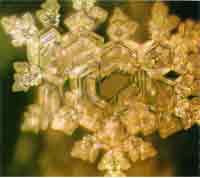
A Japanese scientist, Masaru Emoto, wanted to find a way of scientifically evaluating water quality. He decided to freeze samples of water taken from different sources to compare their crystalline structure. When pure water crystallizes it forms a pure crystal; would contaminated water also form a pure crystal?
Water was placed in petri dishes in a freezer for two hours, then placed under a microscope and photographed at a magnification of 200-500 times. Although the crystals that formed were all unique, the crystals from water of the same source were all similar in shape. Over a four-year period his team took 10,000 photographs.
Tap water from Japanese cities generally would not form complete crystals. Tap water from London formed no crystals at all. Spring water generally produced the most beautiful crystals, as did water from holy places such as Lourdes.
Masaru Emoto’s next experiment was playing music to water. He placed distilled water in between two speakers and played one piece of music fully at normal volume. Then he froze the water.
Classical music produced beautiful crystals of slightly different colours. Healing music, a Tibetan mantra and folk music also produced beautiful crystals. Heavy metal music produced a pattern that looked like a crystal that had exploded into a thousand pieces. Japanese pop music produced ugly square-shaped crystals rather then the normal hexagonal ones.[12]
Since our body is made up of 70% water, Masaru Emoto’s work demonstrates that we are constantly being influenced by the sounds around us and by the information stored in the water we consume.
Water crystals formed when distilled water was frozen
after being played Bach’s ‘Air on a G String’
Water crystals produced when distilled water was frozen
after being played heavy metal music[13]
Music as Medicine
Don Campbell, in his book The Mozart Effect, shows how music, particularly Mozart’s, has all kinds of beneficial effects for human health. Scientists suggest that listening to Mozart helps us to improve our powers of concentration and enhances our ability to make intuitive leaps, by organizing the firing pattern of neurones in the cerebral cortex.[14]
The foetus prefers Mozart and Vivaldi to other composers. When pregnant mothers listened to Mozart and Vivaldi, the babies’ heart rates invariably steadied and kicking declined. Rock music ‘drove most foetuses to distraction’ and they ‘kicked violently’ when it was played to their pregnant mothers.[15]
Slower tempo music slows our breathing rate. The human heartbeat will tend to match the rhythm of music. Listening to Pacabel’s Cannon, for instance, at around 64 beats per minute, the rate of a resting heart beat, will slow our breathing rate and heart rate and change our brain wave pattern from beta to alpha. Music will also calm our nervous system and affect metabolism.
The pitch and rhythm of music influence the limbic system, affecting our emotions. Scientists concluded that preferred music ‘may elicit a profound positive emotional experience that can trigger the release of hormones, which can contribute to a lessening of those factors which enhance the disease process’.[16]
Music is now used to reduce the pain and anxiety of patients undergoing dental treatment and surgical operations. In a study of 59,000 patients, 97% of patients stated that music really helped them to relax in the post-operative situation and during surgery in regional anaesthesia.[17]
In his research, Dr Mike Lewis found that classical music works on the whole brain, whereas pop music affects only one side of the brain. He says, ‘I recommend that those who are looking for a peak experience try classical. Mozart is a great place to start, but it is a question of trial and error, find what works for you.'[18]
Singing/Toning
Dr Tomatis found that a child traumatized by an enraged or screaming adult learns to survive by shutting out these noises. Once the hearing shuts down the child will find it hard to learn.[19]
This explains why some people can sing in tune while others consider themselves ‘tone deaf’. It is impossible for us to make a sound unless we have heard that sound or note before. I have found from experience in teaching voice work that once a person’s hearing is reawakened then they can begin to hear what is sung to them and can then accurately copy this sound.
Toning is defined as – ‘to make sound with an elongated vowel for an extended period’. Toning with other people creates a feeling of unity. It also helps us to release stress and repressed emotions. Regular toning and humming helps to re-energize the body and restore health to the mind, body and spirit.
Toning has a neurochemical effect on the body, boosting the immune system and causing the release of endorphins. Toning assists in good breathing and posture. The muscles of the digestive system are massaged and stimulated by regular toning. Toning has also been effective in relieving insomnia.[20]
Wolfson
Alfred Wolfson was a German-born singing teacher who was plagued by the sounds of artillery and human agony that he experienced as a soldier in the trenches in World War I. Wolfson cured himself of aural hallucinations by singing the terrible sounds that haunted him. He went on to develop a therapeutic method that was based on using the voice. He taught his students to make spontaneous noises, including those of animals, birds and even machines.
Using Jung’s concept of the anima and animus, Wolfson taught that by extending the vocal range through singing exercises, one could contact the opposite polarity within oneself, thereby integrating the psyche and healing a variety of psychological and physical conditions.[21]
Laurel Elizabeth Keys, in her book Toning the Creative Power of the Voice, says, ‘A whiny weak voice will suck in negativity, attracting lingering illness like cancer, asthma, allergies, tumors, rheumatism and arthritis. No healing will be possible until the person reverses their tonal pattern.'[22]
Laurel discovered toning by accident. One day her body became filled with a sound so great that she had to express it. ‘Each time I toned, my body felt exhilarated, alive as it had never felt before, a feeling of wholeness and extreme well-being.'[22]
Chant
Dr Tomatis discovered the power of chant after visiting a monastery in France. The new abbot had stopped the monks chanting. The Benedictine monks normally chant for six to eight hours a day. The abbot believed that the Gregorian chant served no useful purpose and that without it they could recapture that time for other things.
The monks had been chanting in order to ‘charge up’ themselves, but they hadn’t realized what they were doing. As the days passed they became more and more tired. A procession of doctors came to the monastery over a period of several months. They changed the monks’ diet and sleep patterns but the monks became more tired than ever.
When the abbot called in Dr Tomatis in February 1967, Tomatis found 70 out of the 90 monks ‘slumping in their cells like wet dishrags’. He reintroduced their chanting immediately. By November, almost all of them had gone back to their normal activities, their prayer, their few hours of sleep, and their arduous work schedule.[23]
Principles of Sound Healing
Entrainment
The principle of entrainment explains how sound healing works. A harmonious sound projected at a person who is in a state of disharmony will eventually bring them into resonance with the harmonious sound. Our atoms, molecules, cells, glands and organs all have a vibrational frequency. Sounds from outside our body will stimulate sympathetic vibration in the molecules and cells of our body.
Intention
The sound wave created by a person singing or playing an instrument will carry information to the receiver of the sound. We all know that a song can be sung with a loving intention or an aggressive intention. When a mother sings a lullaby to her child, the child feels the love in the mother’s voice and is rocked to sleep. At a football match, fans sing aggressive chants directed at the opposing supporters and their team. Here the intention is to intimidate.
Sympathetic Resonance
When two objects have similar vibratory characteristics that allow them to vibrate at the same frequency, they form a resonant system. When a ‘C’ tuning fork is struck, another ‘C’ tuning fork close by will also begin to vibrate. For healing to occur there must be a resonance or rapport between healer and patient.
Pure Tone
Jonathan Goldman in his book Healing Sounds says, “When we have learned techniques for harmonic toning, the human voice is able to create nearly every frequency, at least within the bandwidth of audible frequency.” Jonathan offers the simple formula, “Frequency plus Intention equals Healing.” If we can find a pure sound frequency coupled with a pure intention then healing will occur. When our body receives a pure tone our muscles will relax and tension will be released.[24]
Sound Healing
When working with a person in a sound healing session I use my voice to scan over their body. I find that my voice will ‘break up’ over areas of their body where there is pain, disease or poor function. I then administer sound healing through my voice using different tones, vowel sounds and harmonics until the imbalance is cleared. I use healing songs, prayers and mantras. I will also help a person find their fundamental sound.
I use a wide range of sound healing techniques to treat all conditions. These include combining my voice with instruments, using sound in combination with bodywork, encouraging the person to express their pain through sound, using tuning forks and different musical intervals.
Dissonant intervals can be used in sound healing to help a person to get in touch with painful emotions. When the dissonance is resolved by sounding the interval above, the person listening will experience a feeling of release, lightness and joy. If the person has experienced deep trauma, I will often chant the person’s name to call back their spirit.
Sound healing can be combined with other healing therapies such as massage and bodywork. After a sound healing treatment most people report a feeling of deep relaxation and an improvement in the function of mind and body. Structural imbalances in the body will often correct themselves during the sound treatment.
References
1. Goldman Jonathan. Healing Sounds. Element Books. Shaftesbury. p30. ISBN 1-85230-314-X. 1992.
2. Tomatis Alfred. The Conscious Ear. Station Hill Press. New York. ISBN 0-88268-108-7. 1991.
3. Jenny Hans. Cymatics, Volumes I and II. Basilius Presse AG. Basel. 1974.
4. Maman Fabien. The Role of Music in the Twenty-First Century. Tama-Do Press. California. p61. ISBN 0-9657714-0-7. 1997.
5. Maman Fabien. ibid. p90.
6. Maman Fabien. ibid. p56. Photograph reproduced with permission from Fabien Maman.
7. Campbell Don. The Mozart Effect. Avon Books. New York. pp242-243. ISBN 0-380-97418-5. 1997.
8. Maman Fabien. ibid. p20.
9. Maman Fabien. ibid. p80. Photograph reproduced with permission from Fabien Maman.
10. Maman Fabien. ibid. p81.
11. Oliver Jim. Notes from CD Harmonic Resonance. The Relaxation Company. New York. 1995.
12. Emoto Masaru. The Message from Water. HADO Kyoikusha. Tokyo. ISBN 4-939098-00-1. 1999.
13. Emoto Masaru. ibid. pp77,87. Photographs reproduced with permission from Masaru Emoto.
14. Campbell Don. ibid. p23.
15. Campbell Don. ibid. p15.
16. Campbell Don. ibid. p73.
17. Harvey Arthur. Music in Attitudinal Medicine. in Campbell Don ed. Music: Physician for Times to Come. Quest Books. Illinois. p189. ISBN 0-8356-0668-6. 1991.
18. Lewis Mike. Why Music Heals Your Mind. Interview. Sunday Express. p51.21 May 2000.
19. Joudry Patricia. Sound Therapy for the Walkman. Steele and Steele. Dolmen. Canada. p7. ISBN 0-9691687-0-5. 1984.
20. Campbell Don. ibid. pp92-93.
21. Campbell Don. ibid. pp102-103.
22. Keys Laurel Elizabeth. Toning the Creative Power of the Voice. DeVorss and Co. California. pp10-12. ISBN 0-87516-176-6. 1973.
23. Wilson Tim. Chant the Healing Powers of Voice and Ear. in Campbell Don ed. Music: Physician for Times to Come. Quest Books. Illinois. pp12-14. ISBN 0-8356-0668-6. 1991.
24. Goldman Jonathan. ibid. p94.
As a practitioner of polarity therapy for over fifteen years I have witnessed the results of profound healing in these areas and more. This article touches on some of the areas where polarity is pivotal to creating change. The combination of deeper energy clearing, nutritional support, hypnosis, and floatation, enhance the ability to move to even higher levels of wellness.
Written or reviewed by a board-certified physician. See About.com’s Medical Review Board.
Polarity therapy is an alternative therapy that involves balancing the flow of energy in the body to improve or maintain health. Developed in the late 19th century by Randolph Stone (a chiropractor and osteopath), polarity therapy is also known as polarity balancing and polarity energy balancing.
Polarity therapy is somewhat influenced by concepts of energy flow used in ayurvedic medicine and traditional Chinese medicine.
However, polarity therapy differs from those systems of medicine given its theory that positive and negative energy charges in the body’s electromagnetic energy field govern the flow of energy.
Practitioners of polarity therapy use a number of techniques (including bodywork and stretching exercises) to balance energy flow and restore health to the body.
How Does Polarity Therapy Work?
According to practitioners of polarity therapy, illness is caused by disruptions in the body’s energy flow and the resulting stress and trauma. Polarity therapy is based on the idea that there are three types of energy fields in the body: long-line currents that run north to south in the body, transverse currents that run east-west in the body, and spiral currents that start at the navel and expand outward.
To find the sources of energy blockages, practitioners of polarity therapy scan the body for symptoms like pain, discomfort, muscle spasms, and muscle tension (especially in the shoulders and back). Once blockages are identified, the practitioner uses a variety of techniques to clear the paths of energy fields, including spinal realignment and movement exercises.
In some cases, practices like deep-breathing, yoga, and hydrotherapy may also be incorporated into polarity therapy.
Uses for Polarity Therapy
In alternative medicine, polarity therapy is said to help with the following health problems:
allergies
anxiety
arthritis
back pain
chronic fatigue syndrome
depression
headaches
irritable bowel syndrome
migraine
In addition, proponents claim that polarity can improve range of motion, increase energy, alleviate pain, relieve stress, and reduce swelling. Some proponents also suggest that polarity therapy can stimulate the immune system and fend off disease, including cancer.
Health Benefits of Polarity Therapy
Although there is currently a lack of scientific support for claims that polarity therapy can treat specific health problems or conditions, some studies suggest that polarity therapy may offer certain health benefits. Here’s a look at some key findings from the available research on polarity therapy:
1) Cancer
Preliminary research indicates that polarity therapy may help offset some of the adverse effects associated with certain cancer treatments. In a pilot study published in Integrative Cancer Therapies in 2005, for instance, researchers found that polarity therapy may help alleviate fatigue and improve quality of life among women undergoing radiation therapy for breast cancer.
For the study, 15 women receiving radiation therapy for breast cancer were assigned to one, two, or no polarity therapy sessions. Results revealed that those assigned to polarity therapy experienced a significantly greater improvement in fatigue and quality of life compared to members of the control group.
In a 2011 study published in the same journal, researchers assigned 45 women undergoing radiation therapy for breast cancer to receive standard clinical care, massage, or polarity therapy over the course of three weeks. At the study’s end, members of the massage and polarity therapy groups reported greater improvements in fatigue and quality of life than members of the group assigned to standard care.
2) Stress
Polarity therapy may help reduce stress, according to a 2009 study published in The Gerontologist. The study involved 42 caregivers of people with dementia. One group received eight sessions of polarity therapy, while a second group had a short-term relief of their caregiving duties. After assessing each participant, the study’s authors determined that those given polarity therapy experienced a significantly greater reduction in stress levels. In addition, members of the polarity therapy group showed greater improvements in depression, pain, vitality, and general health.
Disclaimer: The information contained on this site is intended for educational purposes only and is not a substitute for advice, diagnosis or treatment by a licensed physician. It is not meant to cover all possible precautions, drug interactions, circumstances or adverse effects. You should seek prompt medical care for any health issues and consult your doctor before using alternative medicine or making a change to your regimen.
“For depression, flotation was equal to counseling at near 70%, with relaxation training at 53% and physical therapy and medication at 20%.”
Flotation REST in Applied Psychophysiology Thomas H. Fine, M.A. and Roderick Borrie, Ph.D.
Thomas H. Fine is an Associate Professor in the Department of Psychiatry of the Medical College of Ohio. He began his research and clinical work with Biofeedback in 1975, and, with John Turner, initiated the Restricted Environmental Stimulation Therapy research program at MCO in 1978.
Roderick A Borrie, Ph.D. is a Clinical Psychologist at South Oaks Hospital, Amityville, New York. He began his exploration of therapeutic uses of Restricted Environmental Stimulation Therapy at the University of British Columbia with Dr. Peter Suedfeld, and continues to use it in current work with patients suffering chronic pain and illness.
Introduction
Restricted Environmental Stimulation Therapy (REST) has fascinated many researchers, clinicians, and explorers of consciousness, promising something special - a powerful transformation, a mystical peak experience, an intense change in biochemicals, improved performance, or a healing of our ills. Beyond the fascination, Flotation REST has established itself as a unique method in the field of applied psychophysiology. Flotation REST has proven to be a technique with predictable psychophysiological effects and powerful clinical and performance applications. This article will provide the reader with an introduction to the basic research into Flotation REST’s psychophysiological effects, and a brief overview of the clinical and performance applications currently in use by REST clinicians and researchers. The article will examine in greater detail the use of Flotation REST as an intervention for chronic pain.
REST is an acronym for Restricted Environmental Stimulation Technique, a name developed in the late 1970s by Peter Suedfeld and Roderick Borrie for a technique that had previously been called Sensory Deprivation (SD) or Sensory Isolation. Since much of the early SD research had been misinterpreted, especially by writers of introductory psychology texts, a widely accepted myth developed that SD environments were highly stressful, even models for producing psychotic like experiences. This led to difficulties with the Sensory Deprivation concept. Ultimately Suedfeld and Borrie proposed that, since the process involves restricting the environmental stimulation that the patient or subject experiences, REST would be a more accurate and less provocative acronym.
Flotation REST is a special type of REST popularized by John C. Lilly, M.D. Lilly developed an immersion system in the late 1950s at that was used in early SD experiments. In the 1960s he developed a flotation system in which a person floats in a light free, sound reduced chamber in a highly concentrated solution of Epsom Salt and water maintained at a constant temperature of 9,4.5 F (Lilly, 1977, p. 118).
Both Wet and Dry REST systems have been utilized in research and practice. Wet-REST systems utilize flotation in salt water, and Dry-REST systems utilize a modified REST environment in which a pliable 15 mm. polymer membrane separated the floater from the fluid (Turner, Gerard, Hyland, Neilands, & Fine, 1993).
At the Medical College of Ohio, John Turner and I conducted a series of studies investigating the psychophysiological effects of brief sessions of Flotation REST. The REST environment used in all of these studies was a plastic or fiberglass chamber, approximately 1.1 m. x 1.3 m. x 2.5 m. filled to a 25 cm. depth with saturated epsom salts (Mg SO) solution having a specific gravity of 1.28 and temperature maintained at 34.5 C. The chamber was light-free and the sound level was less than 10 decibels, with further attenuation due to submersion of the ears in the solution. The general protocol consisted of 30-40 minute sessions repeated approximately every third day with a total number ranging from 4 to 20 sessions per study.
The first parameter we addressed was the subjective report of the REST experience. We utilized several indices of subjective reports including the Spielberger state anxiety scale, Zuckerman multiple affect adjective checklist (Turner & Fine, 1990a), profile of mood states (POMS) (Turner, Fine, Ewy, Sershon, & Frelich, 1989), and subjective rating scales of emotion and relaxation. All of the initial studies found marked pre-post and across-session changes indicating relaxation, an increase in positive emotion and a decrease in negative emotions. In addition, an analysis of well over 1,000 descriptions of the REST experience indicated that more than 90% of subjects found REST deeply relaxing.
Psychophysiological Effects of Flotation Rest
In choosing physiological parameters of the REST effect on relaxation, we examined the basic physiological and biochemical hormonal changes associated with stress responding. Physiological parameters measured included blood pressure (BP), muscle tension (EMG), and heart rate (HR). Hormonal parameters included both adrenal axis hormones such as ACTH, epinephrine, norepinephrine, cortisol and aldosterone, and hormones not mediating stress responding (luteinizing hormone and testosterone). Both within and across-session decreases have been observed in various hormones. Hormones directly associated with the stress response. Cortisol, ACTH and epinephrine showed decreases during REST sessions, whereas luteinizing hormone, which is not associated with the stress response, showed no change (Turner & Fine 1983). Likewise, across-session decreases were observed in adrenal-associated hormones (cortisol, aldosterone, renin activity), while a hormone unrelated to stress response (testosterone) did not shown across-session changes (Turner & Fine, 1990a). In a separate study, we examined the across-session effect on both mean cortisol values and their variability, observing a decrease in both parameters (Turner and Fine, 1991). This suggests the possibility of a resetting of the regulatory mechanism of cortisol across sessions. Furthermore, cortisol, which has received more attention than the other hormones, and Blood Pressure, have been shown to maintain the REST effect after cessation of repeated REST sessions (Turner & Fine, 1983). This phenomenon suggests that the REST effect may be more than a simple, immediately reversible response.
Interestingly, in comparing hormonal and BP changes in REST with these changes in another relaxation condition (biofeedback), REST consistently showed greater hormonal effects but similar BP effects to biofeedback assisted relaxation (McGrady, Turner, Fine, & Higgins. 1987). These results led us to consider that REST affects different mechanisms than the biofeedback (since it affected cortisol levels when other methods did not) or was simply more powerful (i.e. REST reached the threshold for cortisol change but biofeedback did not).
Clinical Applications of Flotation REST
These results provide strong support for the hypothesis that Flotation REST serves as a powerful relaxation inducer and has clinical potential in working with patients who have stress-related disorders. There have been several clinical studies that have employed REST as a treatment. The disorders treated include essential hypertension, muscle tension headache, anxiety disorders, chronic pain, psychophysiological insomnia, PMS, and rheumatoid arthritis (Fine and Turner, 1985; Rzewnicki, Alistair, Wallbaum, Steel, Suedfeld, 1990; Fine and Tumer, 1985; Goldstein and Jessen, 1990; Turner, DeLeon, Gibson, & Fine, 1993). The treatment paradigms used in these studies were similar, with REST serving as the primary method of relaxation induction and training. All of these studies demonstrated positive results from the use of REST. One of the unique effects of REST demonstrated in these studies was that chronic pain patients frequently experienced an absence of all pain during flotation, and that this spontaneous anesthesia could remain for up to several hours after the session. Unfortunately, as with many bio-behavioral treatment approaches, the large scale controlled trials have yet to be undertaken.
Flotation REST and Performance Enhancement
A separate, exciting area is the use of Flotation REST in the enhancement of human performance. Several studies, carried out primarily in the research programs of Peter Suedfeld at the University of British Columbia and Arreed Barabasz at Washington State University, have demonstrated enhancement of scientific creativity, instrument flight performance, and piano performance. Several studies of sports performance have had positive results including studies of basketball, tennis, skiing, rifle marksmanship, and dart throwing. In several of the studies the Flotation REST condition was varied with relaxation, or imagery training and always had a more powerful effect. Often, Flotation REST was used with imagery or without imagery, and no difference was, found. Flotation REST, either wet or dry, was sufficiently powerful to affect a change in performance. Barabasz suggests that because REST potentiates imagery while disrupting over learned psychological processes, the technique is especially suited not only for the acquisition of new im- proved skills but the unlearning of less adaptive ones.
Flotation Rest and Pain Management
An in depth examination of the role of Flotation REST in the management of pain can provide us with a clear picture of the psychophysiological nature of the treatment. Pain programs are generally used as a last referral resort for patients whose intractable pain has not responded to the traditional medical treatments. Biobehaviorally based pain management utilizes counseling and behavioral medicine techniques such as relaxation training, meditation. biofeedback, guided imagery, and self-hypnosis. The goals of such treatment are the development of pain avoidance skills, the establishment of routines for optimal fitness within the limitations of a disability, the reduction or elimination of pain, when possible, and/or the patients acceptance of some level of pain.
Flotation REST can have an important role at several stages of the pain management process. By reducing both muscle tension and pain in a relatively short time and without effort on the part of the patient, flotation provides a dramatic demonstration of the benefits of relaxation. Relief is immediate and, although temporary, offers promise of further relief from REST and other relaxation-based strategies. Symptom reduction gained from flotation can increase a patient’s motivation and interest in the remainder of the therapy plan. Pain patients generally come into treatment feeling suspicious and skeptical, requiring a clear demonstration that they can be helped. Flotation can be the vehicle for that demonstration.
Cara floating for peace
The relaxation following flotation can be used to facilitate relaxation training. In the treatment reported here, training in relaxation and other psychological pain control strategies occurred during the flotation REST sessions as well as in counseling sessions. Specially prepared audio programs introduced patients to breathing techniques, progressive muscle relaxation, autogenic training, guided imagery and hypnotic suggestions for pain reduction while they floated. Training and practice in those same techniques followed in counseling sessions and at home.
The most common etiologies of pain in this group of patients were from motor vehicle accidents, work accidents, or chronic illness. Most had endured their pain for longer than six months and had also suffered various levels of anxiety, anger, and depression. These emotional problems must be considered in the treatment of chronic pain patients.The first data are pre-post pain ratings from 16 patients who floated from one to 16 flotation sessions. Each patient reported on up to four body areas, providing a total of 253 pre-post , measures. The average percentage of relief, as measured in decrease from the pre-session value, was 31.3% for all sessions and all measures. To determine whether flotation REST provides more pain relief to some parts of the body as opposed to others, these measurements were examined by body area. Pain reduction in most body areas was close to the overall mean of 31%, except the upper back, which showed a 63.6% pain reduction, the arms which showed a 48.2% reduction, and the legs, which showed a 15.3% pain reduction. The duration of relief varied from two hours to seven days.
A second set of data came from a survey mailed to patients who had completed the program. The questionnaire asked patients to assess how much pain relief they received from the various components of the pain program (Flotation, relaxation training, and counseling) and from other treatments they had received medication (pills and shots), physical therapy, chiropractic, and surgery. Short-term pain relief, long-term pain relief, relief from anxiety or stress, and relief from depression were indicated separately. Additionally, they were asked whether each treatment improved their outlook and/or helped them cope with their pain.
All 27 respondents had received treatments other than those from this pain program: 81% had used pain medications; 56% had had some form of pain injections; 70% had received physical therapy; 59% had received chiropractic treatment; 22% had undergone surgery. These patients reported more short-term and long-term pain relief from flotation than from the other therapeutic modalities.
For non-pain symptoms, the comparisons were even more striking. Patients reported far more relief from anxiety and stress from flotation than any other modality. For depression, flotation was equal to counseling at near 70%, with relaxation training at 53% and physical therapy and medication at 20%.
Enjoy your unique experience.
Patients also claimed to have reaped a variety of other benefits from flotation, reporting improvements in sleep (65%), mental concentration (77%), energy (46%), interpersonal relationships (54%), ability to work (35%), ability to cope with pain (88%), ability to cope with stress (92%), and feelings of well-being (65%) resulting from flotation REST.
In answering the question, “Did this treatment improve your outlook toward your pain?” 96% responded positively for flotation, 100% for counseling, 100% for relaxation training, 50% for physical therapy, 24% for pain pills, 17% for pain shots, 15% for chiropractic. To the question, “Did this treatment help you cope effectively with your pain?” 96% responded positively for flotation, 92% for both relaxation training and counseling, 50% for pain shots, 44% for pain injections, 38% for physical therapy, and 17% for chiropractic. It is clear that flotation was rated on average as more effective than other treatments with respect to pain, anxiety and depression relief.
Flotation REST and Chronic Illness
Summing up thus far, the data are supportive of flotation REST being useful in pain reduction, stress and tension abatement, and mood enhancement. Besides chronic pain, other patients treated at our facility were those with chronic physical illnesses, those with cancer, those with trauma to the nervous system, those with depression or bipolar mood disorder. anxiety disorders, and those suffering overwhelming stress.
Uniquely, Flotation REST provides an effortless introduction to deep mental and physical relaxation. The majority of our chronic illness patients suffered from autoimmune diseases, including rheumatoid arthritis, lupus, scleroderma, and Reiters syndrome. For these patients, discovering relaxation meant a dramatic reduction in symptoms, such as joint pain, headache, fatigue and depression. Several patients with lupus reported that regular flotation permitted them to reduce their dosage of prednisone while experiencing less frequency and severity of symptoms. Two patients with scleroderma reported relief from flotation. One reported relief from pain and stiffness that lasted almost a week after her third flotation session. As this patient continued she also experienced relief from her depression about the illness, a dramatic reduction in her use of steroids and other medications, a reduction in joint pain and swelling, and less frequent heartburn and headaches. After a three month course of treatment with flotation and counseling she was able to return to her job.
Flotation REST and Depression
When depression is in reaction to the circumstances of a physical injury or illness, Flotation REST can produce an immediate elevation in mood, probably due to the mood enhancing effects of deep relaxation as well as the optimism that occurs with the experience of physical relief. When depression is the primary diagnosis, flotation is best used as an adjunct to counseling and then only after the patient has gained a modicum of feeling in control. Caution is necessary in administering REST with depressed patients due to the often obsessive nature of negative thinking that will continue during the REST session. Once these patients have developed a better understanding of their disorder, flotation REST can be a mood elevator that speeds the course of therapy, especially when combined with positive guided imagery during the sessions.
REST and Applied Psychophysiology
The REST environment can be viewed, from a biofeedback perspective, as a system that enhances the connection between consciousness and physiology by reducing external information rather than amplifying internal information. We describe biofeedback as a process of amplifying and displaying information about processes that we normally do not attend to or are unable to discriminate from the wealth of informational noise always present. REST reduces environmental noise, and in a flotation environment one is able to be aware of all sorts of physiological information, (i.e. muscle tension, heart rate, etc.) that we are often not aware of in normal quiet environments.
REST is an ideal environment for the acquisition of biofeedback based learning. Many years ago Lloyd and Shurley published a paper demonstrating its effect on the acquisition of single motor unit control. Acquisition of single motor unit control was superior in the REST chamber (Lloyd & Shurley, 1976). Our investigations found the same advantage with heart rate control. Similarly Dry-REST environments might be exceptional environments for neurofeedback training. While we have learned much about REST in the last twenty years, its potential in applied psychophysiology has barely been exploited. In this age of cyberspeak, we might begin to think of expanding the clinical bandwidth of applied psychophysiology by taking another look at REST. References
Fine, T.H., & Turner, J.W., Jr. (1983). The Use of Restricted Environmental Stimulation Therapy (REST) in the Treatment of Essential Hypertension, First International Conference on REST and Self-Regulation, 136-143.
Fine, T.H. & Turner, J.W., Jr. (1985). Rest-assisted relaxation and chronic pain. Health and Clinical Psychology, 4, 511-518.
Goldstein, D.D. & Jessen, W.E. (1987). Flotation Effect on Premenstrual Syndrome. Restricted Environmenntal Stimulation: Research and Commentary, 260-273.
Lilly, J.C. (1977). The deep self. New York: Simon & Schuster.
McGrady, A.V. Turner, J.W. Jr. Fine, T.H. & Higgins, J.T. (1987). Effects of biobehaviorally-assisted relaxation training on blood pressure, plasma renin, cortisol, and aldosterone levels in borderline essential hypertension. Clinical Biofeedback & Health, 10(1), 16-25.
Rzewnicki, R. Alistair, B.C. Wallbaum, Steel, H. & Suedfeld, P, (1990). REST for muscle contraction headaches: A comparison of two REST environments combined with progressive muscle relaxation training. Restricted Environmental Stimulation: Research and Commentary, 245-254.
Turner, J.W. Jr. DeLeon, A. Gibson, C. & Fine, T. (1993). Effects of Flotation REST on range of motion, grip strength and pain in rheumatoid arthritics. In A. Barabasz & M, Barabasz (Ed.),Clinical and experimental restricted environmental stimulation (pp. 297- 336). New York: Springer-Verlag.
Turner, J.W. Jr. Fine, T.H. (1983). Effects of relaxation associated with brief restricted environmental stimulation therapy (REST) on plasma cortisol, ACTH, and LH. Biofeedback and Self-Regulation, 9, 115-126.
Turner, J.W. Jr. & Fine, T.H. (1990a). Hormonal changes associated with restricted environmental stimulation therapy. In P. Suedfeld, J. Turner, & T. Fine (Eds.), Restricted environmental stimulation theoretical and empirical development in flotation REST (pp. 71-92). New York, NY: Springer-Verlag.
Turner, J.W. Jr. & Fine, T.H. (1991). Restricting environmental stimulation influences variability and levels of plasma cortisol. Journal of Applied Physiology, 70(5), 2010-2013.
Turner, J.W. Jr. Fine, T. Ewy, G. Sershon, P. & Frelich, T. (1989). The presence or absence of light during flotation restricted environmental stimulation: Effects on plasma cortisol, blood pressure and mood. Biofeedback and Self-Regulation, 14, 291-300.
Turner, J.W. Jr. Gerard, W. Hyland, J. Neilands, P. & Fine, T.H. (1993). Effects of wet and dry flotation REST on blood pressure and plasma cortisol, In A. Barabasz & M. Barabasz (Ed,),Clinical and experimental restricted environmental stimulation (pp. 239-248). New York: Springer-Verlag.
Author’s address for information:
Thomas H. Fine, M.A.
Department of Psychiatry
Medical College of Ohio
Richard D. Ruppert Health Center
3120 Glendale Ave.
Toledo, OH 43614-5809 [email protected]
Schedule your REST session in combination with any other therapeutic service to maximize results. Hypnosis, Energy Work, Polarity, Massage, Coaching, Meditation, you design your experience.
The reason we began offering floatation was not really the idea of offering spa services but more that it was in alignment with experiencing higher consciousness.
As Polarity Therapists we understand the connection to a deeper knowing, the limitations of the attachment to the physical body through the three principles of motion as taught in Ayurvedic philosophy; rajas, tamas, and sattva. Polarity and floatation therapies go hand in hand, an integration of these therapies is surely a path to enlightenment.
Intelligence
There is a mass mind awakening to higher level of consciousness. Our center is focused on providing the many paths to higher levels of consciousness through energy based therapies; polarity, floatation, also known as deprivation or isolation tank, energy systems clearing and aligning, as well as guided imagery through hypnosis. Anyone on this path of enlightenment to higher levels of consciousness will appreciate the combination of therapies to deepen this experience.
Just yesterday I received word from the Architectural Access Board that I have their permission to go ahead and put the tank at the new center where everything else is happening. Yeah!
Moving there without the tank has felt like leaving one of your kids at home. Floatation has become such a huge part of the business that having it stay behind in the old location just feels wrong. Now that I have permission to move the tank I face the next challenge. Strategically planning the cost associated with the final phase of the build out. Stretching, imagining, and possible bartering, I am determined to bring the tank home to it’s new location to complete the center.
It’s exciting to bring the tank over to West Boylston! For those of you who are not aware; when I started my polarity practice in 1999 I was across the street from this new location. Something keeps bringing me back to this town, not sure what it is but West Boylston is an awesome little town and central to so many major routes and highways. It makes perfect sense to be there.
As I anticipate the tank up and running in West Boylston I see the need to eventually hire someone who can manage the front of the space as well as support the floaters. This is very exciting time for Crystalline Awaken, it is the next stage of expansion, one that became very necessary in order to get the idea of floating in front of so many more people. I am looking forward to seeing a big expansion with the opening with the floatation tank room. It’s exciting to look at the plans; shower directly in front of the tank, an ideal situation, space for hanging the clothes, towel storage, bathrooms right next to the tank room, it really doesn’t get any better than this.
For the next few weeks I will carefully plan this move out to bring it to completion as quickly as possible. At the present time I am surveying all the current floaters and future floaters to determine which factors are most important to people. As I see it right now, it appears this location will be inviting, hours will be expanded to offer evening appointments during the week. There is a meditation space right outside of the float room for anyone wishing to arrive early or waiting for someone. And there is plenty to do in West Boylston for the person waiting, trails, water, scenery, it’s just a beautiful little town to visit.
From many major highways our location intersects with 140, traveling from Leominster, Lancaster, Princeton, Holden, Marlboro, Northboro, Westboro, Worcester, Boston, Springfield, Connecticut, Rhode Island, New Hampshire, or local residents, it’s an easy and pleasant travel.
I would like to highly encourage floaters to book their appointments in advance, take advantage of the specials that I will be sending out. Check emails, these are how the specials are delivered. I look forward to a waiting list to float, and you should to. Book ahead and pay ahead for the discounts, make sure you get yourself in now.
It’s happening… finally!!!! I hope you are as excited as I am to see this happening later than I anticipated but happening still.
See you soon! Remember that you can always add bodywork to the float session or simply sit in the meditation space and maximize your visit. We offer organic teas, water, and comfort for your wait time. You may want to read a little, we have a shop copy of the Book of Floating for those who want to know more about what they are doing in the tank.
Breath in and say the number 3, next breath, say the number 2, next breath say the number 1 and close your eyes. Affirm to yourself; “I am calm, I am relaxed, I am in control.”
With your eyes closed, begin to move your eyes from right to left in the shape of the number 8. You are strengthening your 3rd eye, the center of intuition and vision.
Body Movement
Stand with your feet approximately shoulder width apart
Move your hips in the shape of an 8, maintain focus on the ease of the movement of your hips, do not move your whole body, keep the movement limited to your hips.
Focus
Sit with your eyes closed
Using the same method of counting as above and the affirmation “I am calm, I am relaxed, I am in control.” Do this for 3 minutes each day.
Dance
Turn on music that your body resonates with and allow yourself to move, stay fully aware of the movement of each muscle, allow yourself to let go completely. Move easily and effortlessly with the rhythm.
Sound
Using the sound of your own voice, use vowel sounds and feel the vibration, locate where the vibration is, which chakra, what do you notice, how do you feel?
![Hela cancer cells being broken up by the musical scale played on a xylophone[6]](../../../img/img/image-article/old-231/Cancer Cells Broken up by Xylophone.gif)
![Blood cells responding to the sound of a person's voice[9]](../../../img/img/images-original/dbimg/heather64b.jpg)
![Water crystals produced when distilled water was frozen after being played heavy metal music[13]](../../../img/img/images-original/dbimg/heather64d.jpg)